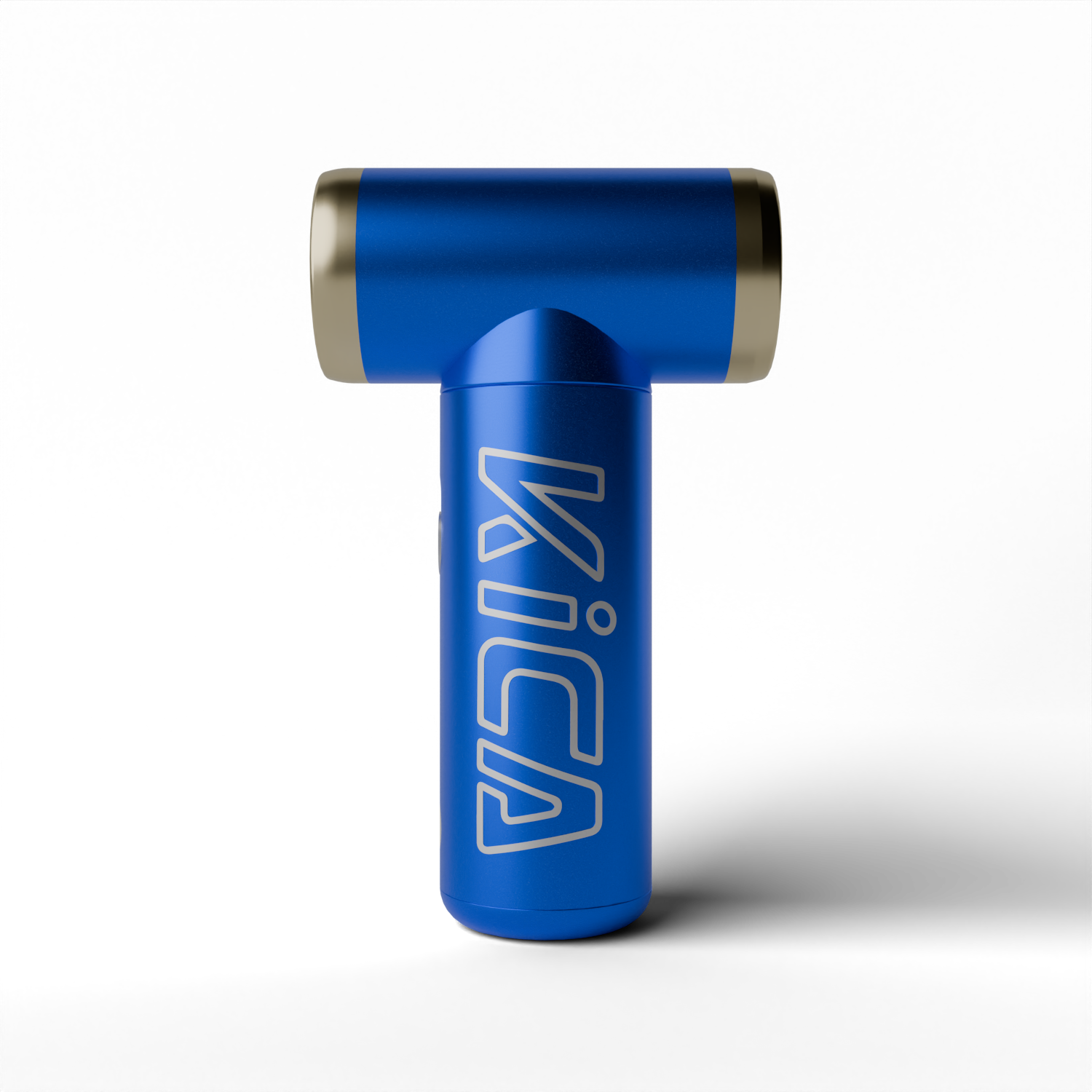
Ask for PNG. That's the right answer for about nine jobs in ten, and I say it as someone who renders every single image to EXR first.
The format question usually arrives late. It turns up in the last email before delivery, phrased as "our printer wants TIFF" or "the agency asked for layered files, do you have those?", and by then the answer depends on decisions that were made days earlier. So here's how I think about the three formats, what each one really carries, and which one you should name in the brief.
What each format holds, in plain numbers
A render isn't a photo. Inside Blender it's a grid of floating-point light values with no ceiling: a white wall might sit at 0.8, a chrome highlight at 40, the filament of a lamp at 900. Every delivery format is a decision about how much of that to keep and how much to bake down into something a browser can show.
| Format | Depth per channel | Transparency | Separate passes | Typical size at 4000 × 4000 px |
|---|---|---|---|---|
| PNG, 8-bit | 256 levels | Yes | No | 10 to 25 MB |
| PNG or TIFF, 16-bit | 65,536 levels | Yes | No (TIFF can hold Photoshop layers) | 60 to 130 MB |
| EXR, single layer | 16 or 32-bit float | Yes | No | 30 to 70 MB |
| EXR, multilayer | 16 or 32-bit float | Yes | Yes, often 10 to 20 | 200 to 500 MB |
The sizes are what I typically see on product shots, not a law. A bottle on plain white compresses far better than a fabric macro full of noise.
PNG: the boring right answer
An 8-bit PNG is lossless, carries a transparent background, and opens in everything from Photoshop to the upload box of a marketplace. It holds 16.7 million colours, which is exactly as many as the screen your customer is looking at can show. For a finished image that nobody plans to regrade, there's nothing left on the table.
Where does it fail? Heavy editing after delivery.
Take a soft grey studio backdrop, push the exposure up by two stops in Photoshop, and an 8-bit file starts to show bands: visible steps where there used to be a smooth gradient. If I know a retoucher will work on the image, I export 16-bit PNG instead. Same format, same compatibility in any serious editor, 256 times more steps per channel, and the banding problem goes away. It costs disk space and nothing else.
One thing to say in the brief: sRGB. Every PNG I send for web use is sRGB, because that's what browsers assume when a file has no profile, and an image in a wider colour space shown as sRGB looks flat and slightly grey.
TIFF: for printers and retouchers, mostly out of habit
A 16-bit TIFF and a 16-bit PNG contain the same pixels. I've compared them channel by channel. The reason print houses still ask for TIFF is that their whole workflow is built around it: it supports CMYK, embedded ICC profiles are read reliably by every layout program, and a retoucher can save layers into it.
Two warnings. First, compression: LZW or ZIP inside a TIFF is lossless and fine, JPEG compression inside a TIFF is not, and some export dialogs offer it without much fuss. Second, transparency. TIFF can store an alpha channel in two different ways, and layout software doesn't always guess the right one, which is how you end up with a thin dark or white fringe around a cut-out product on a coloured catalogue page. If you need a cut-out for InDesign, I'd rather send a PNG.
And CMYK? I don't convert unless the printer gives me their profile by name (something like PSO Coated v3 or ISO Coated v2). A blind conversion to "some CMYK" dulls saturated blues and oranges, and the printer's prepress will convert again anyway. An RGB TIFF with an embedded profile is the safer handover. The pixel dimensions matter more than the container, and I've covered those in the post on render resolution for print.
EXR: the working file, not the deliverable
EXR is where the render really lives. It stores the raw floating-point values, so that 40 on the chrome highlight is still 40 and not a clipped 255. Drop the exposure by three stops and the detail inside the highlight comes back.
Nothing else on this list can do that.
A multilayer EXR also carries passes. On a typical 3D product rendering job I write out diffuse, glossy, transmission, emission, a shadow pass, depth, and Cryptomatte, which is an automatic mask for every object and material in the scene. With those a compositor can recolour one cap, tone down one reflection or lift the shadow density without me pressing render again.
The catch is that EXR needs a person who knows what it is. The data is linear, with no display curve baked in, so in a plain image viewer it looks dark, contrasty and wrong.
Last spring a supplements brand asked me for "the highest quality format" for a pouch render, and I took them at their word and sent a 380 MB multilayer EXR. Their designer opened it in a preview app, saw a murky image, and wrote back asking whether something had gone wrong with the render. Nothing had. I sent a 14 MB PNG the same afternoon and that was the file they used everywhere.
So here's the common mistake: treating EXR as a better-looking version of the image. It isn't. Think of it as the negative, while the PNG is the print. Convert an EXR to JPEG in a viewer that skips the tone mapping and you get a worse picture than the PNG I'd have exported, because the look of the image (contrast curve, highlight roll-off, the final colour tweaks) is applied after the EXR stage.
JPEG and WebP still have a job
They just aren't master formats.
Your shop will serve JPEG or WebP to customers whatever you upload, so for Amazon listing images and A+ content renders I send a PNG master plus a JPEG at quality 90, usually 400 to 900 KB at 2000 to 3000 px on the long side. That's light enough to upload fast and large enough for zoom to work.
Don't edit the JPEG and save it again. Each save recompresses, and by the third round the edges of small text on a label start to smear. Edit the PNG, export a fresh JPEG.
What I'd actually ask for
Match the format to the next person who touches the file, not to a vague idea of quality.
- Web shop, Amazon, Shopify, social: 8-bit PNG in sRGB, plus JPEG copies.
- A designer placing the product on their own background: PNG with transparency, and the contact shadow as a second PNG so they can set its strength.
- Printed catalogue, trade-show wall, packaging mock-up: 16-bit TIFF, RGB with an embedded profile, at the pixel size the printer specifies.
- An in-house retoucher or compositor, or frames for an animation: multilayer EXR with Cryptomatte, and a PNG preview so everyone can see what it's meant to look like.
- No idea yet: PNG now. Ask for the rest when you know.
That last one isn't a cop-out. I normally keep the EXR from the final render, so a later request for a TIFF or a transparent version is an export that takes minutes, not a new render. What can't be added afterwards is a pass that was never rendered. If there's any chance someone will want to recolour parts or adjust reflections separately, say so before the final render and I'll switch the passes on. It adds maybe 10 percent to the render time and a lot to the file size, which is why I don't do it by default on every job.
Does the format change the price? No. On the fixed packages, whether that's a single Product Shot at EUR 49 or the five-image Listing Pack at EUR 149, the export format is a setting. What costs time is discovering in week two that the image has to be 9000 px wide for a banner.
Three lines for your brief
Write down where the image will be used (web, print, both), who works on it after me (nobody, a designer, a retoucher), and the largest size it will ever be shown at. With those three lines I can pick the format, bit depth and resolution myself, and you don't need to care what a half-float is.
If you've got a CAD file and a printer or marketplace spec you're not sure how to read, send both through the contact form and I'll tell you what the export should be before any product visualization work starts.